Business Tips
How Do Dominicans Actually Find a Local Business?
Oct 3, 2026
11 min read
consumer behaviourWhatsApp
Read More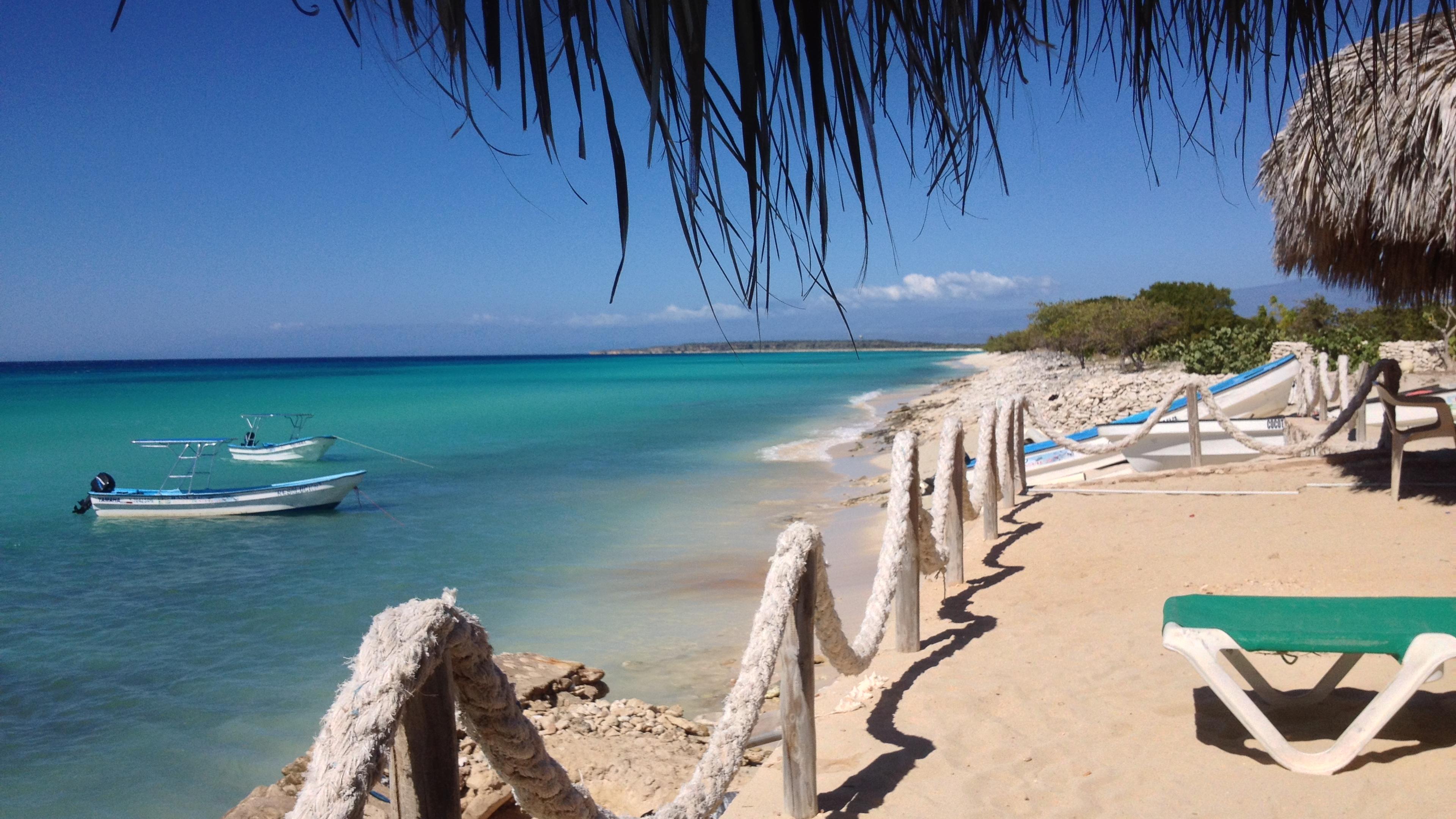
For twenty years, "Dominican tourism" has meant the east coast — Punta Cana, Bávaro, La Romana. That's changing, fast, and it's changing in the one corner of the country almost no web developer is paying attention to: the southwest. Pedernales and Cabo Rojo are the site of the largest tourism development project in the nation's history, and while the hotels are still rising, a rare window has opened for the local businesses already there. This is why the southwest is the Dominican Republic's next digital frontier — and why the businesses that build their web presence now, before the wave fully lands, are the ones that will own it.
The numbers are not speculative. The Pedernales–Cabo Rojo project is a roughly US$2.2 billion development led by a consortium including Grupo Puntacana, designed to build around 12,000 hotel rooms by 2033. The cruise port at Cabo Rojo opened in January 2024 and moved fast: according to Caribbean Journal's reporting on the Ministry of Tourism's 2025 figures, it handled 176,690 cruise passengers in 2025 across 42 cruise operations — more than Samaná and Santo Domingo combined, in a region that had historically seen almost no tourism traffic, with major lines including Norwegian, Royal Caribbean, MSC, and Holland America now calling there. A new international airport with a runway long enough for the largest wide-body jets is being paved for an expected opening in late 2026, and international chains including Iberostar, Hyatt, Hilton, and Marriott have committed to the first phase, with the first large all-inclusive expected to open around the end of 2026. This is not a region hoping tourists might come someday. They are already arriving by the shipload.
Here's what makes this a genuine opportunity rather than just news: the tourists have arrived, but the digital infrastructure hasn't. On the ground, Pedernales is still a cash-first economy with a single, frequently-empty ATM in town, taxis without meters or fixed rates, and local businesses that exist online — if at all — only as Facebook profiles and word-of-mouth phone numbers passed around in traveler groups. When a cruise passenger wants to visit Bahía de las Águilas — regularly called one of the finest beaches in the Caribbean — the ones who get the independent booking are the handful of operators established enough to be found and trusted online. Everyone else competes for scraps or works through the cruise lines at a commission. The demand has outrun the web presence by a wide margin, and that gap is precisely where a well-built website turns a small local business into the obvious choice.
In Punta Cana, ranking on Google for a tourism keyword means fighting hundreds of established, well-optimized competitors who have spent a decade building authority — a hard, slow, expensive battle. The southwest is the opposite. Most valuable searches — "Bahía de las Águilas tour," "things to do in Pedernales," "Cabo Rojo excursions," and their Spanish equivalents — have only a small number of serious local sites competing for them today. That means a properly built, genuinely bilingual website can reach the first page of Google for meaningful terms in months rather than the years those same terms demand in the east. It's the same competitive math that makes the La Romana and Bayahíbe corridor such an opening, amplified — because Pedernales is even earlier in its curve. First-mover advantage in search compounds: every month a page ranks, it gathers reviews, links, and history that make it progressively harder to unseat. The businesses that plant their flag now will be defending page one when the competition finally arrives with the hotels.
The southwest's digital vacuum isn't uniform — some business types have almost no real online competition at all:
• Tour and excursion operators. This is the clearest opportunity in the region. Bahía de las Águilas, Laguna de Oviedo and its flamingos, the Hoyo de Pelempito viewpoint, birding in the Sierra de Bahoruco, and the only larimar mines on Earth are world-class draws, and cruise passengers actively research independent alternatives to overpriced ship excursions. An operator with real, bookable, bilingual excursion pages can capture that demand directly — exactly the playbook we lay out for tour operators and excursion companies.
• Guesthouses and the coming vacation rentals. Today's lodging is independent and family-run; tomorrow's will include villas and rentals riding the development. Both need what a website provides — legitimacy, direct booking, and independence from platform commissions.
• Restaurants in Pedernales town. As overnight and fly-in visitors grow, the restaurants findable on Google Maps with a real menu and location will win the "where do we eat" moment that currently defaults to guesswork.
• Transport and transfer services. The route from Santo Domingo, the port transfers, the airport transfers to come — all are searched constantly and served today mostly through informal channels. A bookable bilingual site is a structural advantage.
• Real estate. Land near Cabo Rojo and Bahía de las Águilas is appreciating on the strength of the development, and foreign buyers researching it do so entirely online, in English. That's a vertical almost nobody local is serving well yet.
The formula that wins on the east coast applies here, with the region's specific realities sharpening a few points:
• English-first, built bilingual. The current market is cruise passengers and international independent travelers researching in English, with the fly-in market — and its French and German segments — arriving with the airport. Each language needs its own real, indexed pages, built the way we describe in bilingual SEO, not a translate widget.
• Fast on mobile, above all. Every one of these visitors is researching on a phone, often on a ship's connection or roaming data. A slow site loses them before it loads, and speed converts directly into bookings.
• Photo-forward, without the weight. The southwest sells itself on imagery — turquoise water, cactus-and-limestone desert coast, flamingos — but heavy galleries kill mobile speed, so the image-optimization craft matters even more here.
• WhatsApp-connected. Bookings close in a chat; the site's job is to start that conversation in one tap, alongside Google Maps and Instagram, as we cover in connecting your site to WhatsApp, Maps, and Instagram.
• Prices published and deposits online — the region-specific edge. This is where the southwest's cash-first reality becomes an opportunity. In a destination with one unreliable ATM, the operator whose site publishes prices and accepts a card or a deposit link removes the single biggest friction a nervous visitor feels. The ability to secure a booking with an online deposit, using the local payment tools we detail in accepting online payments in the DR, is a genuine competitive weapon where most competitors still say "cash only."
Search engine visibility is not instant — Google needs weeks to months to index new pages and rank them for competitive terms. That single fact dictates the strategy: the businesses that are indexed and ranking before the airport opens and the fly-in market arrives in force are the ones that will capture it. A site launched the month the first hotel opens is already late; a site launched now spends 2026 accumulating the rankings, reviews, and authority that will be worth their weight when the visitor volume steps up. The cruise market is here to practice on and profit from today; the fly-in market is the prize, and the runway to rank for it is closing as the literal runway is being paved.
This is a frontier, and frontiers are uncertain — pretending otherwise would be a disservice. Megaprojects slip: the airport's opening has already moved from an earlier target to late 2026, and infrastructure timelines in the region have a history of stretching. The province borders Haiti, whose instability introduces a real perception risk that can affect investor and traveler confidence. And large-scale tourism in an ecologically sensitive area — Jaragua National Park, a UNESCO Biosphere Reserve, sits at the heart of it — carries genuine sustainability questions. None of this is a reason to dismiss the opportunity; it's a reason to size the bet correctly. And here the math actually favors moving early: a professional website is a modest, one-time investment, while the upside if the project delivers even part of its promise is a decade of compounding first-mover advantage. Building now isn't betting the business on Pedernales — it's making a small, smart wager on a region that already has a working cruise port and international capital committed to it.
Web development is remote work, which means a business in Pedernales or Cabo Rojo doesn't need a developer down the street — it needs one who understands the Dominican tourism market, the bilingual cruise-and-fly-in audience, and the local tools that make a site actually convert. That's exactly what we do at DR Web Studio: fast, bilingual, bookable websites for Dominican tourism businesses, built once and working around the clock, with WhatsApp and local payments wired in and the first year of maintenance included. If your business is anywhere in the southwest and you can see the wave coming, the smartest time to build was before everyone else did — which is right now. Contact us for a free consultation and let's put your flag on page one before the crowd arrives.