Business Tips
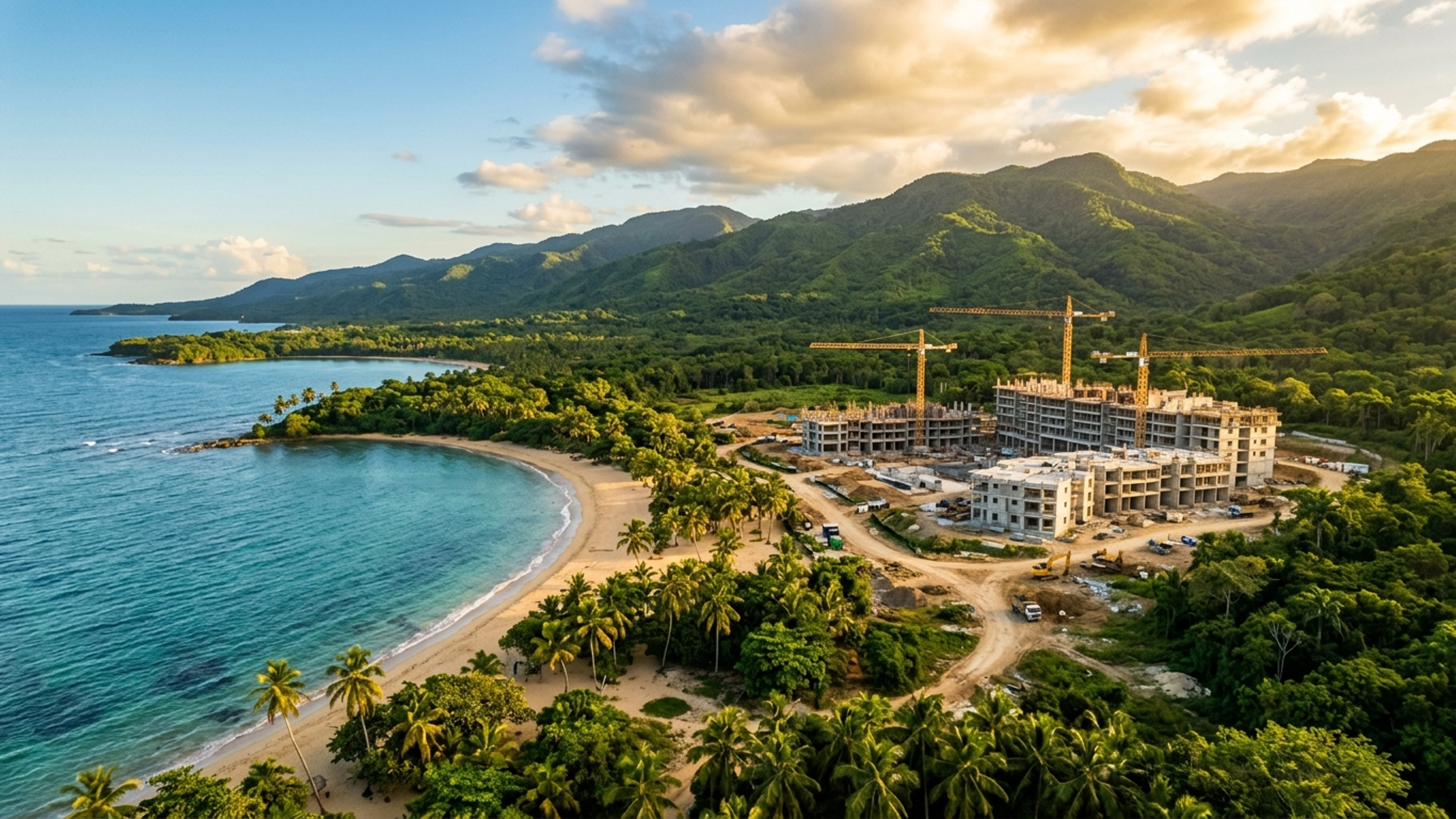
The Dominican Republic's north coast has been waiting decades for its second act — and it now has a name, a master plan, and cranes on the ground. Punta Bergantín, a public-private megaproject on more than 10 million square meters of coastline between Puerto Plata and Villa Montellano, is the government's flagship bet to return the country's original tourist region to the front rank. The first resort is already under construction, four more are queued behind it, and the first guests are expected for the 2027–2028 high season. For the local businesses of Puerto Plata, Villa Montellano, Sosúa, and Cabarete, that timeline is not a headline — it's a countdown. Just as we've argued for Pedernales in the southwest, the businesses that build their digital presence before the wave arrives are the ones that will own it. Here's what's coming, and how to be findable when it does.
This is not a rumor-stage project. Punta Bergantín is a master-planned destination — hotels, branded residences, commercial space, a theme park, and a marina concept — being developed through a public-private trust, with Grupo Puntacana among the key players. The scale is Punta Cana-class: reports from the project's leadership at FITUR 2026 describe up to nine hotels totaling more than 4,500 rooms, with Hyatt, Westin, Marriott, and Meliá among the confirmed brands, plus 1,500 vacation units and 2,500 mixed-use units across a ten-to-fifteen-year build-out. And it has moved past announcements into concrete: the Meliá Bergantín Beach — a 400-room five-star resort developed with Grupo Puntacana, an investment north of US$100 million — broke ground in October 2025, land sales inside the project have reportedly passed US$100 million, and construction of the first hotels is underway in 2026 with operations targeted for the 2027–2028 high season. The stated ambition: lift Puerto Plata's share of international arrivals from around 3% to 9% — roughly 300,000 additional visitors flying into a region minutes from Gregorio Luperón International Airport.
We've written about the DR's other emerging fronts — Pedernales's cruise-driven southwest, Miches's all-inclusive boom — and Punta Bergantín has a distinct character worth understanding, because it shapes the opportunity. Unlike Pedernales, this isn't an isolated frontier: it's plugging a megaproject into an already-functioning tourism ecosystem. Puerto Plata already has an international airport with direct flights from three continents, two of the country's busiest cruise ports in Amber Cove and Taíno Bay, and the established markets of Sosúa and Cabarete just down the road. That means the businesses around Punta Bergantín won't be waiting years for infrastructure — the customers, roads, and flights exist today, and the megaproject adds a step-change of demand on top. It also means the ripple effects start before the hotels open: thousands of construction workers, suppliers, and project staff need housing, food, transport, and services right now, and the real-estate market around Villa Montellano is already moving on expectations, the same dynamic we described for real estate websites elsewhere on the coast.
Here's the strategic math, and it's the same math that made early movers rich in Punta Cana. Search rankings compound with time: a website that launches now spends 2026 and 2027 getting indexed, accumulating reviews, links, and authority — so that when the Meliá's first guests search "things to do near Punta Bergantín," "excursions Puerto Plata," "villa rental Villa Montellano," the businesses that built early are the ones on page one, defending positions that get harder to take every month. A website launched the season the hotels open is already behind. And unlike a pure frontier bet, this window has a firm anchor: the first resort is physically under construction with a public opening target. The uncertainty isn't whether meaningful demand arrives — Meliá, Westin, and Hyatt have already made that bet with their capital — it's only exactly when, and "2027–2028 with possible slippage" is precisely the timeline that rewards building a web presence in 2026.
The megaproject's shape creates especially clear opportunities for particular businesses:
• Tour and excursion operators. Punta Bergantín's guests will be minutes from the 27 Charcos de Damajagua, Mount Isabel's cable car, whale season in nearby Samaná, and the whole north coast adventure menu — and resort guests research independent excursions online, exactly the playbook in our guide for tour operators.
• Real estate and property management. The land rush is already on, residences and vacation units are part of the master plan itself, and the foreign buyers evaluating the "next Punta Cana" do all their research online, in English.
• Restaurants, transport, and services in Puerto Plata and Villa Montellano. A destination adding thousands of rooms needs everything around it — the businesses findable on Google when the demand lands will absorb it.
• Construction-adjacent and B2B suppliers. Before a single tourist checks in, a decade of build-out means contractors, suppliers, and professional services with a credible web presence can win project business — the same B2B logic we laid out for Santiago.
The formula follows the north coast playbook with the frontier timing layered on: genuinely bilingual pages built for real bilingual SEO, since the incoming guests skew North American and European; fast on mobile, because every one of them researches on a phone; connected to WhatsApp and Google Maps; able to take bookings and online payments; and — the timing-specific move — publishing content now for the searches that will exist later: "restaurants near Punta Bergantín," "Villa Montellano property," "Puerto Plata airport transfer." Those searches are low-volume today, which is exactly why they're winnable today; they won't stay either.
One more reason the timing is less speculative than a typical frontier: the demand engine around Punta Bergantín is already running. Puerto Plata's two cruise terminals are among the busiest in the country — the Dominican Port Authority's early-2026 schedules showed well over a hundred cruise calls across the national ports in January alone, with Taíno Bay and Amber Cove carrying the largest share — which means hundreds of thousands of visitors are already stepping ashore minutes from the project site every season, before a single Bergantín hotel opens. Those cruise passengers are today's practice market: the excursion operator, restaurant, or transfer service that builds a bookable web presence now can earn from the cruise flow immediately, while the same site accumulates the rankings that will capture the stay-over wave when the resorts open. It's the rare frontier where the bridge income and the long-term position come from the same investment — build once, get paid twice.
Megaprojects earn skepticism, and this one deserves the honest version. Timelines slip — the project's own history includes years of relaunches before the current momentum, and a 10-to-15-year build-out will not move in a straight line. The 4,500-room figure is a master-plan ambition, not a signed guarantee; what's bankable today is the smaller first phase actually under construction. Large-scale development also brings real questions for Villa Montellano's community and environment that the project's sustainability commitments will be measured against. None of this changes the core calculation for a local business, for the same reason we gave in Pedernales: a professional website is a modest, one-time investment, the first phase is funded and physically rising, and the surrounding region's tourism economy already works — so the downside of building early is small, while the upside of owning the searches when 300,000 new visitors arrive is a decade of compounding advantage. The risk worth worrying about isn't that you build too early. It's that you build after everyone else does.
At DR Web Studio we build exactly what this moment calls for: fast, bilingual, bookable websites for Dominican businesses, with WhatsApp, Maps, and local payments wired in and the first year of maintenance included — and we've made the north coast's digital opportunity something of a specialty. If your business is anywhere in Puerto Plata's orbit and you can read a construction timeline, you know what the next two years are for. Contact us for a free consultation and let's have you ranking before the first guest checks in.