Business Tips
How Do Dominicans Actually Find a Local Business?
Oct 3, 2026
11 min read
consumer behaviourWhatsApp
Read More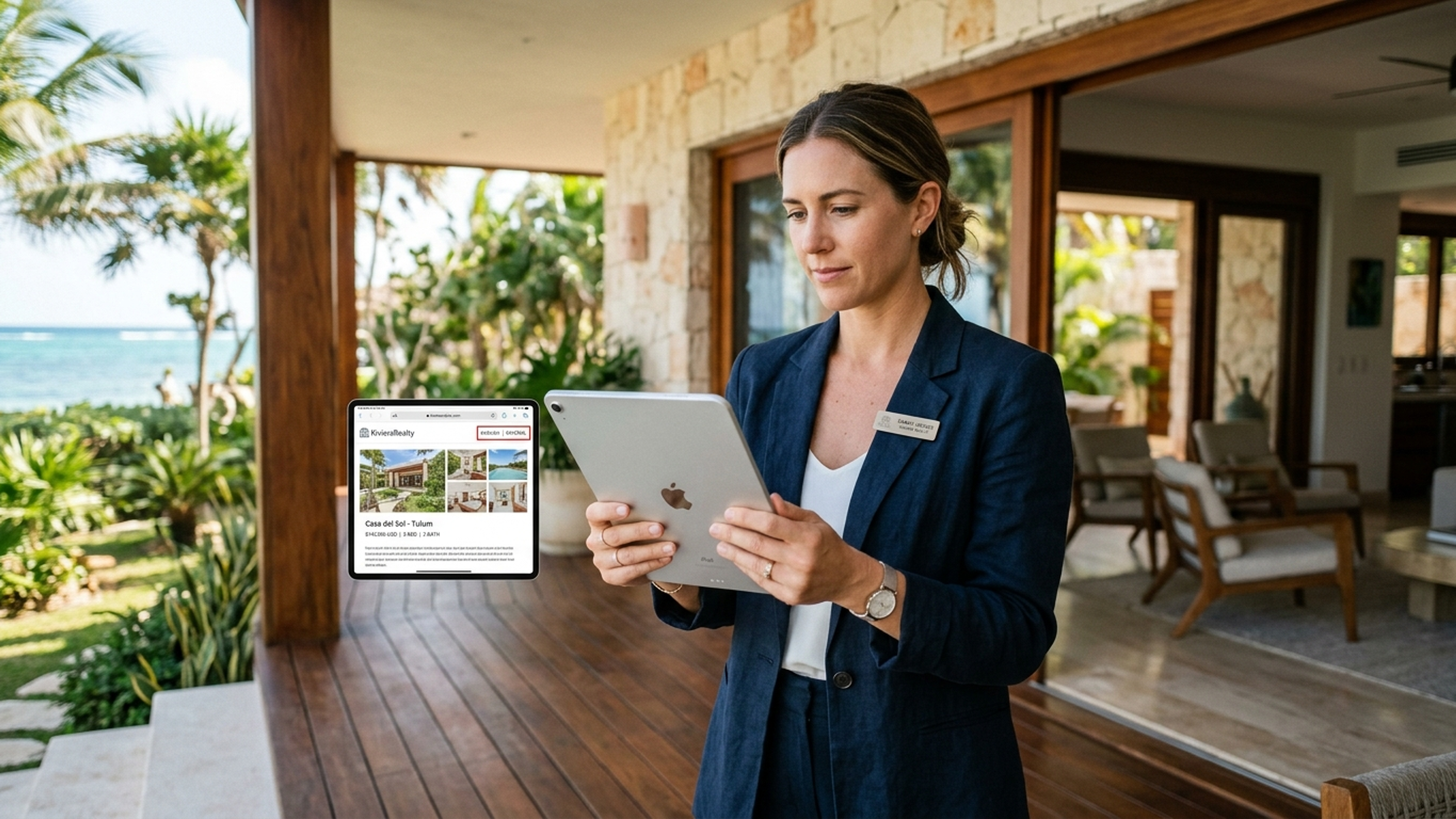
Punta Cana real estate sells to a buyer who is almost never in the room: a Canadian browsing condos from a Toronto winter, a New Yorker comparing pre-construction projects, a Dominican living abroad planning the return home. The entire early journey — discovery, comparison, shortlisting, first contact — happens on a screen, usually a phone, usually in English. Which makes the real estate website the industry's most consequential asset, and also, across most of the local market, its most neglected one. Here's what a real estate website in Punta Cana actually needs to do.
The typical international buyer researches for months before contacting anyone. They start broad ("Punta Cana condos for sale"), narrow by area (Cap Cana vs Bávaro vs Cocotal), compare specific properties across several agency sites, verify the agency itself is legitimate, and only then send the first message — carrying a shortlist and a set of anxieties about buying in a country whose laws they don't know. Your website meets them at every one of those stages or loses them at one of them: broad landing pages for discovery, neighborhood pages for narrowing, listing pages for comparison, an about-and-credentials page for verification, and a frictionless contact path for that carefully considered first message. Most local sites only build the listings and wonder why the inquiries are cold.
The listing page is where the shortlisting decision happens, and the bar is set by the international portals your buyers also browse. Each property needs its own URL and page with: abundant, honest photos — optimized so thirty images still load instantly abroad, using exactly the techniques in our tourism image-optimization guide; a video walkthrough, which for a remote buyer substitutes for the visit itself; the full specification set — price, size, bedrooms, HOA fees, title status, delivery date for pre-construction — because every unanswered spec is a reason to shortlist the competitor who answered it; the location on a map with distances to the beach, airport, and golf; and a contact action tied to the property, so the WhatsApp message or form arrives saying which listing it's about. Speed matters doubly here: listing pages are photo-heavy by nature, and slow pages measurably lose buyers who have twelve other tabs open.
Buyers search areas before properties — "living in Cap Cana," "Bávaro vs Punta Cana village," "best areas to buy in Punta Cana" — and those searches are where the highest-intent traffic enters the funnel. A well-built agency site has a genuine page for each zone it serves: what it's like to live there, price ranges, property types, amenities, who it suits. These pages rank for the searches listings can't, they position the agency as the local authority, and they funnel readers directly into the matching listings. Almost no Punta Cana agency has built them seriously, which makes this the clearest open SEO opportunity in the vertical.
Real estate here inverts the usual language formula: the buyers are overwhelmingly English-speaking, while the sellers, landlords, and long-term rental market are largely Spanish-speaking. A serious site therefore needs both, built as genuinely independent language versions that each rank in their own market — English pages competing for "Punta Cana condo for sale," Spanish pages competing for "vender mi apartamento Punta Cana" and capturing the listing side of the business. Agencies serving Las Terrenas or the French-Canadian buyer wave should treat French as the third language, phased in on the money pages first.
The foreign buyer's real obstacle isn't the property — it's the process. Can foreigners own property in the DR? How does title verification work? What does closing cost? What taxes apply? Is financing possible? The agency that answers these questions in clear, honest, well-organized pages does three things at once: it ranks for the exact searches every nervous buyer makes, it defuses the anxiety that stalls deals, and it establishes the credibility research says visitors judge in seconds — trust is assessed from design and clarity before a word of your pitch is read. Pair that content with the agency's own proof — years operating, team photos, association memberships, client testimonials with names and countries — and the verification stage of the buyer's journey ends at your site instead of derailing there.
International buyers have fully adopted WhatsApp for exactly this purpose, and the site should hand them into it in one tap, with the property reference attached — the integration playbook is here. From that chat, the modern remote workflow unfolds: a scheduled live video tour of the shortlisted units, documents shared, questions answered across time zones. The site's job is to start that conversation warm — a buyer who arrives having read your neighborhood guide, your buying-process page, and three complete listings needs far less convincing than one who found a phone number under a photo.
Agencies ask whether their own site matters when portals bring the traffic. The answer mirrors every platform story in this series: use portals for reach, but own your hub — because the portal shows your listing next to twelve competitors, while your site shows your listing next to your credibility. For agencies with real volume, a custom listing platform — searchable, filterable, self-managed, bilingual by design — is a web-application build (from around US$1,250 in our pricing) that pays for itself in the control it returns: your inventory, your leads, your data, no portal fees deciding your visibility. Smaller agencies can start with a standard site around US$950 and grow into the platform; the full numbers are in what a website costs in the DR in 2026, and the commissioning process in our step-by-step guide.
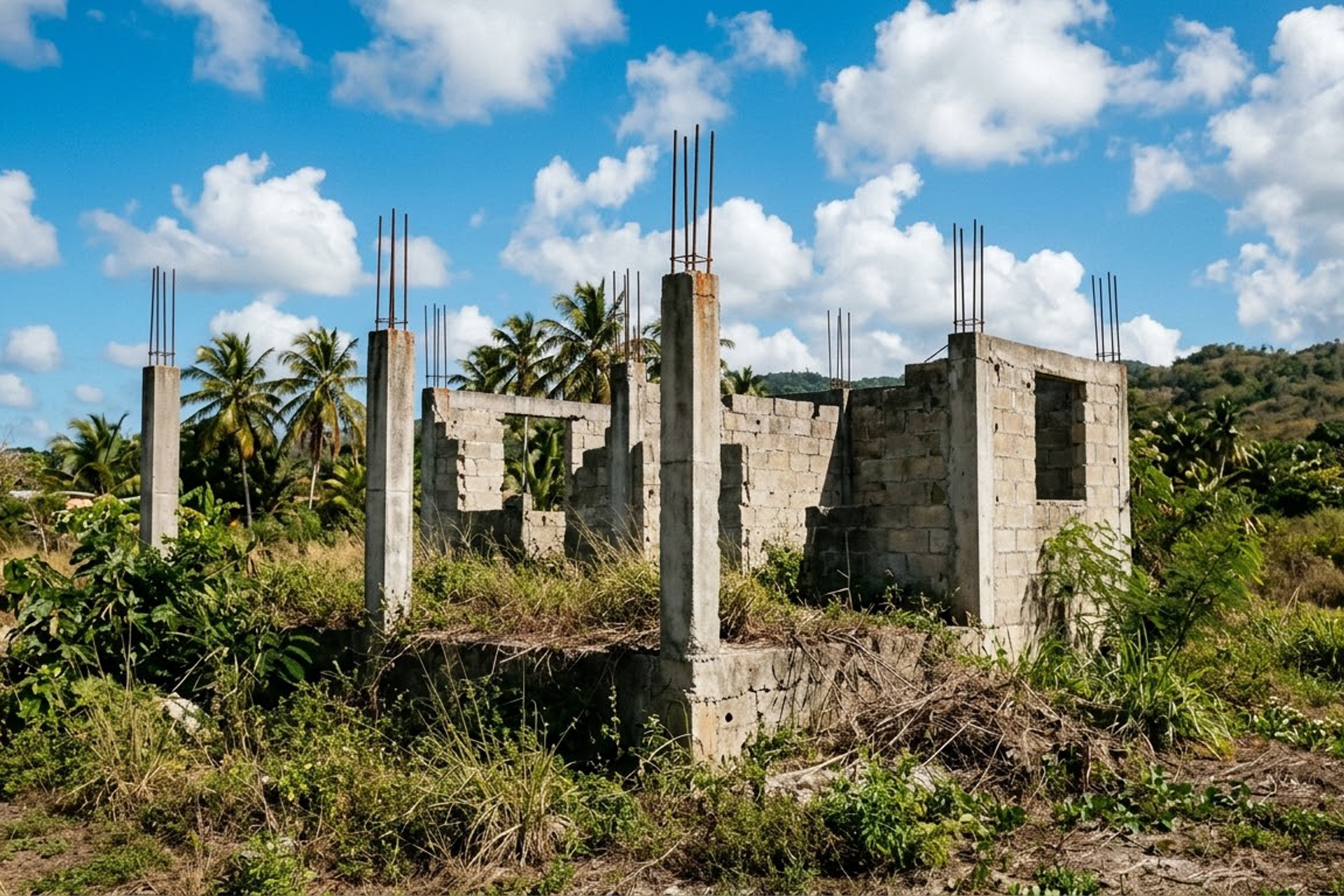
A large share of Punta Cana's market is pre-construction, and selling a building that doesn't exist yet raises the website's burden of proof. The project page needs everything a resale listing has, plus: renders clearly labeled as renders alongside real photos of the site's current state — buyers forgive an empty lot, not a surprise; the payment plan spelled out (reserve, signing, construction installments, delivery balance), since staged payment is often the buying reason itself; the delivery timeline with construction updates — a dated photo feed of actual progress is the single strongest trust asset a pre-construction page can carry, because it proves the project is alive in a market where stalled developments are the buyer's chief fear; and the developer's track record, with previous completed projects named and linkable. Agencies that maintain honest monthly-update pages for their projects find they do double duty: they reassure existing buyers who committed months earlier, and they convert new ones who arrive mid-construction and can scroll the entire visible history of promises kept. That's a page a portal listing structurally cannot provide — and one more reason the agency's own platform earns its keep. It also feeds the follow-up machine: every monthly update is a legitimate reason to message your WhatsApp list of interested buyers, keeping deals warm across the long pre-construction sales cycle without ever feeling like a cold pitch. Few tools in real estate marketing convert as reliably as evidence of progress, delivered on schedule, to people who already asked to hear from you — and your own website is the only channel that makes it possible.
DR Web Studio builds fast, bilingual, listing-ready real estate websites and custom property platforms for the Punta Cana market — pages that survive comparison with the international portals your buyers are already using. If your agency is ready for a website that turns browsers abroad into inquiries with a shortlist, contact us for a free consultation.