Web Design
Is Your Website \"Under Construction\" Forever?
Sep 17, 2026
9 min read
under constructionabandoned websites
Read More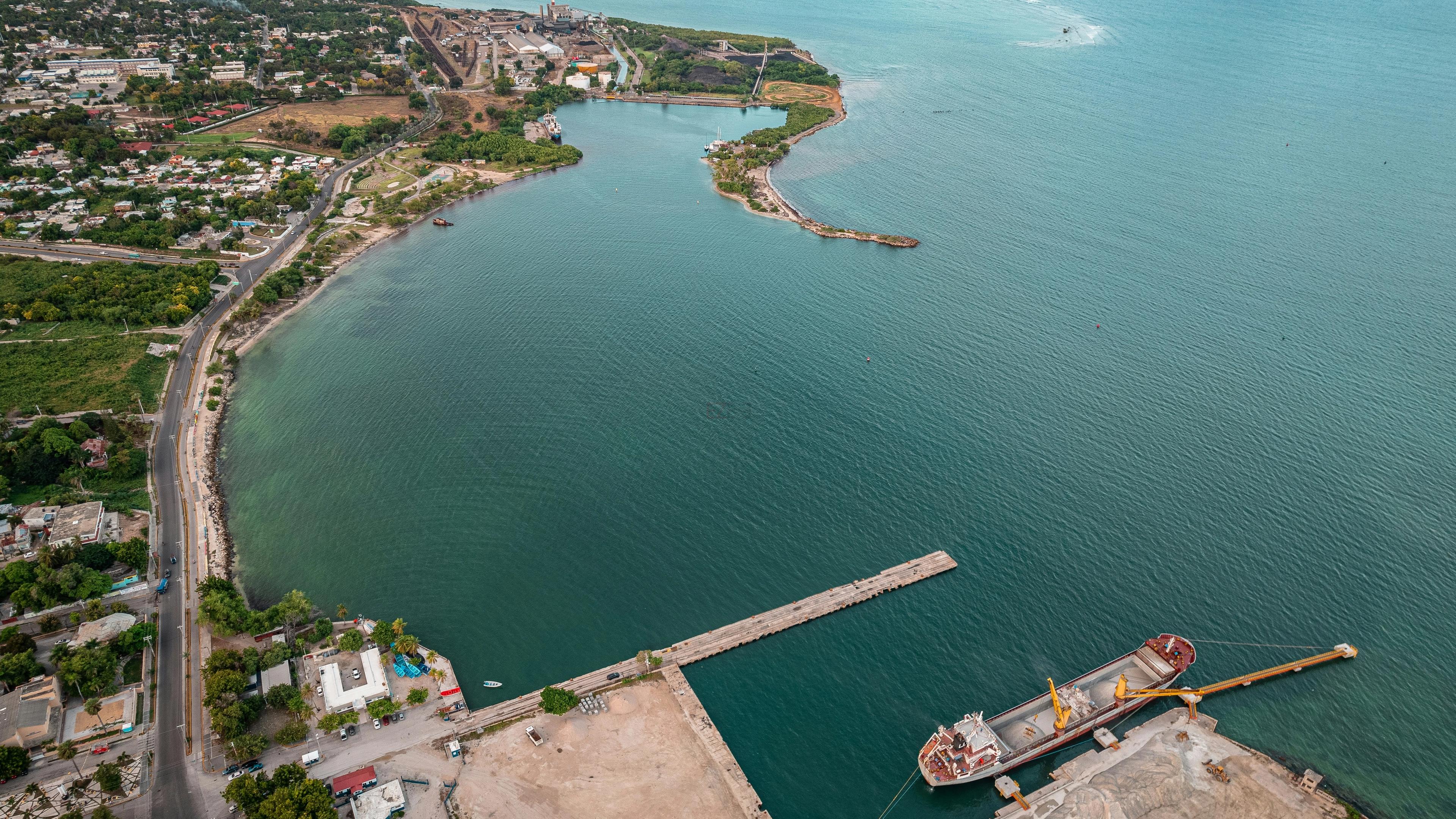
There's a Dominican Republic that Dominicans keep for themselves. It's in the southwest, where the Sierra de Bahoruco falls straight into the Caribbean, where rivers of cold mountain water run right into the sea, where coffee grows in the highlands and the only larimar deposit on Earth sits in the hills above the coast. Barahona is not a resort destination and has never tried to be — it's the place where Dominican families go on vacation, where birders and ecotourists come for the biosphere reserve, and where the road south toward Pedernales is one of the most beautiful drives in the Caribbean. For the businesses of this region, the opportunity is unusual and specific: a real, established, year-round market with almost no serious online competition. Here's how to take it.
If Pedernales is the frontier, Barahona is the base camp. It's the provincial capital and the region's functioning hub — hotels, restaurants, tour operators, a coastal highway, and even its own small airport at María Montez — and it's the gateway virtually every visitor to the southwest passes through. What makes it worth a business's attention is the depth and variety of what's actually here. The official tourism board describes Barahona as one of the country's most authentic and naturally diverse destinations, where stone beaches, cold rivers flowing into the sea, and lush mountain scenery create a unique Caribbean landscape. Concretely, that means San Rafael and Los Patos with their river-fed natural pools, the surf break at Bahoruco, the Sierra de Bahoruco National Park at the heart of a UNESCO biosphere reserve, Lago Enriquillo, the coffee route in the highlands, the larimar mines above La Ciénaga, and — an hour and a half further south — Bahía de las Águilas. That's a portfolio most destinations would envy, and it works twelve months a year.
Here's what makes Barahona genuinely different from every other destination we've covered. Punta Cana serves international tourists. Miches serves all-inclusive guests. The north coast serves cruise passengers and expats. Barahona's core market is Dominican — families from Santo Domingo and the interior taking weekends and holidays, escaping to the rivers and stone beaches, filling the hotels at Semana Santa and through the summer. Layered on top is a smaller but high-value international stream: birders coming specifically for the Sierra de Bahoruco (some of the best birding in the Caribbean), ecotourists, and the growing trickle of travelers extending a Bahía de las Águilas trip into the wider region. This dual audience shapes everything about the web strategy — Spanish comes first here in a way it doesn't on the east coast, and the calendar runs on Dominican holidays, not northern winters.
Now the part that should get a local business owner's attention. Barahona has real, proven, recurring demand — and almost no serious web presence serving it. The hotels are known by name and word of mouth; the tour operators are found through Facebook, hotel front desks, or by asking around; the restaurants exist on Google Maps at best. Meanwhile the searches are happening every single day: "qué hacer en Barahona," "hoteles Barahona," "tour Bahía de las Águilas desde Barahona," "playas de Barahona," and their English equivalents. In Punta Cana, ranking for a tourism keyword means fighting hundreds of well-funded competitors. Here, a properly built, genuinely bilingual site can reach page one for meaningful terms in months, because the field is close to empty. That's the same first-mover math we described in Pedernales — but with a crucial difference: in Barahona the customers are already arriving. You don't have to wait for an airport or a megaproject. The demand exists now; it's simply being served by whoever the visitor happens to stumble upon.
• Tour and excursion operators. This is the region's clearest opportunity. Bahía de las Águilas trips, Sierra de Bahoruco birding, the larimar mines, Lago Enriquillo, the coffee route, and waterfall and cave tours are all bookable products that visitors research online — exactly the playbook in our guide for tour operators. Specialist birding operators in particular serve an international clientele that books months ahead and pays well.
• Hotels, ecolodges and cabañas. Barahona's lodging is independent and character-driven — the very definition of businesses that need direct booking to escape platform commissions and reach travelers directly.
• Restaurants and roadside businesses. The coastal highway is the region's artery, and the businesses findable on Google Maps with real photos and hours capture the constant flow of road-tripping Dominican families.
• Larimar and artisan producers. Barahona sits on the only larimar in the world, and jewelry workshops here sell a product with genuine international demand — a natural fit for an online store that reaches far beyond the people who drive past the workshop.
• Coffee producers and agritourism. The Sierra de Bahoruco coffee route turns working farms into experiences, and the product itself sells online to a specialty market that pays a premium for origin.
The formula, tuned to the region's realities:
• Spanish-first, but genuinely bilingual. The core market is Dominican, so Spanish leads — but the birders, ecotourists, and international visitors are the high-value segment, which makes real English pages, built with proper bilingual architecture, essential rather than optional.
• Fast on mobile, and resilient. Visitors research on phones, often on patchy rural connections along the coastal highway — so speed isn't a luxury here, it's whether your page loads at all.
• Photo-forward, without the weight. Barahona sells itself on scenery — the cliffs, the river pools, the blue of larimar — but heavy galleries kill mobile speed, which is what image optimization solves.
• WhatsApp and deposits, because this is a cash region. Bookings close in chat, so one-tap WhatsApp and Maps is the baseline — and in a region where ATMs are scarce outside the city, the operator who can take an online deposit removes a real barrier for a visitor planning from Santo Domingo.
• Practical content that ranks. Pages answering what travelers actually ask — how to get to Bahía de las Águilas from Barahona, when the birding season is best, whether you need 4x4 for the larimar mines — capture planners weeks ahead and rank for terms nobody local is competing for.
Barahona rewards realism. Infrastructure is genuinely more limited than the resort zones: roads to the best sites can be rough, some attractions need 4x4, connectivity is patchy in the mountains, and the tourism volume, while real, is a fraction of the east coast's. The domestic weekend pattern also means demand concentrates on holidays and weekends rather than spreading evenly. And the region's proximity to the Haitian border shapes some travelers' perceptions, fairly or not. But notice that none of these are reasons a website underperforms — several are reasons it matters more: when a destination is harder to navigate, the business that explains clearly, answers questions honestly, and lets a visitor book with confidence stands out dramatically. Barahona's constraints are exactly what a good website compensates for, and the modest cost of building one against a proven, year-round market is one of the better small bets available in Dominican tourism.
Web development is remote work, so a business in Barahona doesn't need a developer in town — it needs one who understands the Dominican tourism market and the southwest's particular mix of domestic weekenders and international ecotourists. That's exactly what we do at DR Web Studio: fast, bilingual, bookable websites for Dominican businesses, with WhatsApp and local payments wired in and the first year of maintenance included. Whether you're filling cabañas, birding tours, a larimar workshop's order book, or tables along the coastal highway, the site that gets found is the one that gets the business. Contact us for a free consultation and let's put the southwest on the map it deserves.