Business Tips
What the Dominican Government Actually Publishes About Digital Adoption
Oct 18, 2026
10 min read
ENHOGARINDOTEL
Read More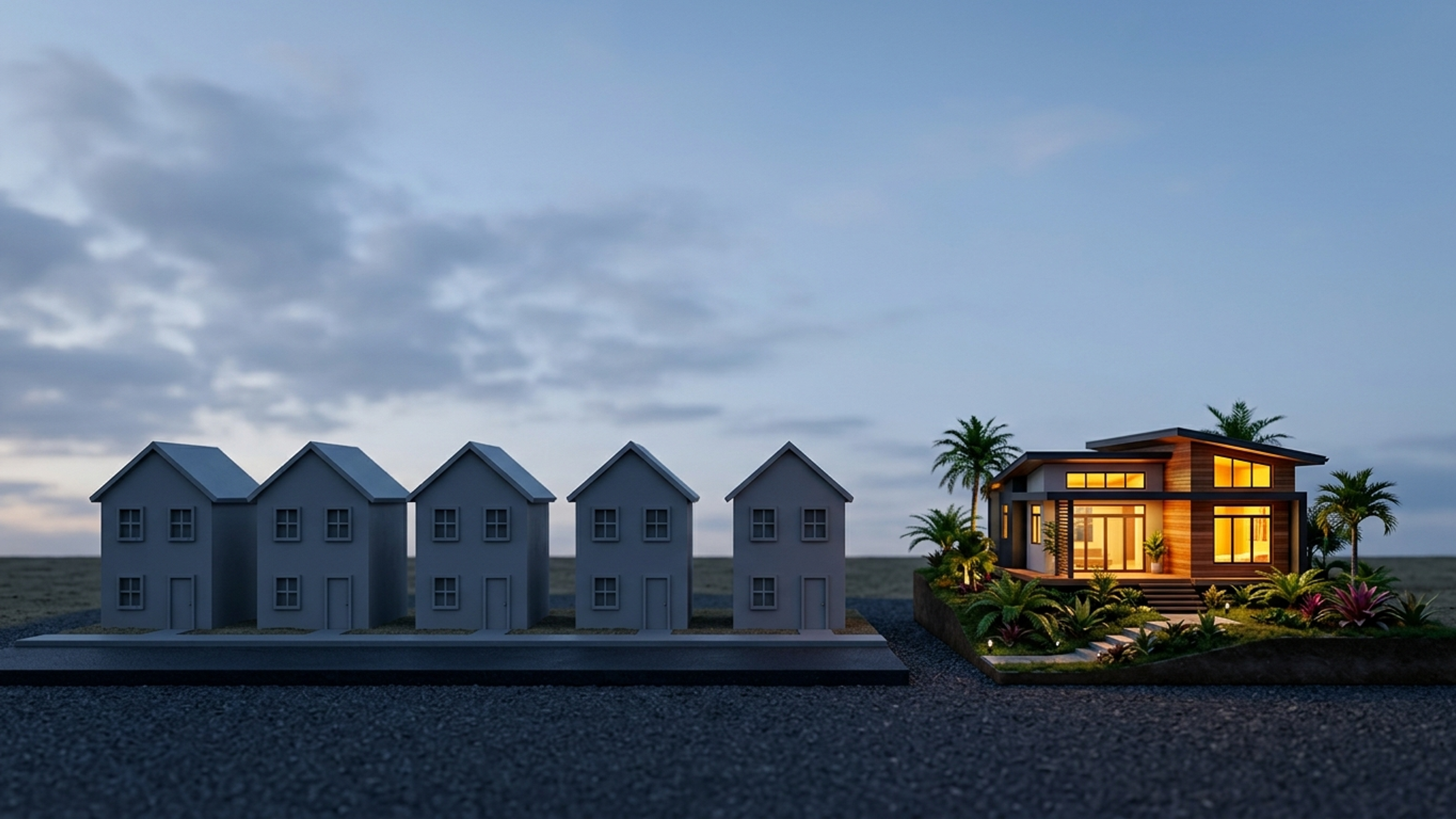
Every Dominican business owner researching a website meets the same fork in the road within five minutes: the ads promise you can build it yourself on Wix or Squarespace tonight for a few dollars a month, while a developer quotes a real project with a real price. One of these has to be a ripoff, right? Not exactly. Website builders and custom-built sites are both legitimate tools — but they're built for different situations, and the marketing on both sides obscures where the line actually falls. Here's the honest comparison, with the trade-offs the sales pages don't mention, so you can tell which side of the line your business is on.
Credit where it's due: Wix, Squarespace, and their peers solved a real problem. They let a non-technical person get something online in a weekend — drag, drop, publish — for a monthly subscription. The templates look clean out of the box, hosting is bundled in, and for certain situations that's genuinely enough. A hobby project, a personal page, an idea you want to test before investing anything, a business so early it doesn't yet know what it sells — these are cases where a builder is the rational choice, and a developer who tells you otherwise is selling, not advising. The question was never whether builders work. It's what you give up in exchange for the convenience, and when those trade-offs start costing more than the subscription.
Builders carry every feature every customer might ever want, loaded on every page — which makes them structurally heavy. You can optimize a template site, but you can't make it truly fast, because the bloat is the platform. In most markets that's an annoyance; in the Dominican Republic it's a business problem, because your customers are overwhelmingly on phones, often on mobile data, and speed converts directly into sales — both through Google's rankings, which favor fast sites, and through visitors who simply leave when a page hesitates. A custom-built site using a modern framework carries only what it needs, which is why the same design can load in a fraction of the time. On a slow connection, that difference isn't cosmetic; it's the difference between a customer and a bounce.
Here's the trade-off almost nobody prices in: templates look like templates. Your customers may not consciously recognize the theme, but they've seen its cousins a hundred times, and sameness reads as generic. This matters more than it feels like it should, because design is credibility online — Stanford's research on web credibility found that people judge how trustworthy a business is largely from how professional its site looks. A template puts a hard ceiling on that judgment: you can look tidy, but you can't look distinctive, and for a business competing on trust — a hotel, a clinic, a real estate agency, anyone selling something that costs real money — "tidy but generic" quietly costs conversions every single day.
This is the trade-off that matters most in the Dominican market specifically. A serious business here needs to sell in Spanish and English — to locals, tourists, expats, and the diaspora — and builders handle this badly. Their multilingual support typically ranges from clumsy add-ons to automatic translation widgets, and neither produces what actually works: separate, real, indexed pages per language that Google can rank independently, with correct signals about which page serves which audience. We've written about why real bilingual SEO requires proper architecture — and that architecture is precisely what template platforms make difficult or impossible. For a Dominican business, this isn't an edge case. It's half your market.
A Dominican business site lives or dies on local plumbing: WhatsApp as the primary contact channel, Google Maps for the physical location, Instagram for the social proof, and local payment options for actually getting paid — the stack we cover in connecting your website to WhatsApp, Maps, and Instagram and accepting online payments in the DR. Builders offer generic versions of some of this, but they're designed for the U.S. market's tools and assumptions. Getting Dominican payment processors, proper WhatsApp flows, and local business practices working smoothly on a closed platform ranges from awkward to impossible — while on a custom build they're simply requirements, implemented directly.
The builder's price is a subscription; the custom site's price is a project. Comparing them honestly means comparing them over years, not months. A builder at $20–40 per month (business tiers, apps, and transaction fees push most real businesses toward the upper end and beyond) runs $240–500 every year, forever, while you still don't own the platform — stop paying and the site vanishes, and you can never take it with you. A custom site is a larger one-time investment that you own outright, hosted anywhere, improvable by any developer, no rent due. Somewhere between year two and year three the lines cross for most businesses — and that's before counting the revenue side of the ledger: the conversions the faster, more credible, properly bilingual site was winning the whole time. The builder is cheaper the way renting a market stall is cheaper than owning a shop.
So, plainly. Choose a builder when: you're testing an unproven idea, the budget is genuinely zero, the site is temporary or personal, or you just need a simple one-page presence this week and you accept its ceiling knowingly. Choose custom when: the website is how customers find and judge your business; you need to compete in Spanish and English; your market is mobile-first and your competitors' sites are slow; you need WhatsApp, local payments, and Maps working properly; or you're building a long-term asset rather than renting a presence. The line, in one sentence: a builder is for having a website; a custom build is for winning customers with one.
Fairness cuts both ways: a custom site built badly is worse than a good template. The Dominican market has its share of "developers" who hand over a slow WordPress install with a purchased theme — technically custom, practically a template with extra steps — and disappear. If you're going the custom route, hold the work to the standard that justifies it: ask to see real performance scores on the developer's past sites, ask exactly how the bilingual architecture works, ask what happens after launch and who maintains it. A custom build is only worth its price when it delivers the speed, the SEO structure, and the local integrations the builders can't — so demand evidence of all three before you sign.
One more trade-off deserves its own section because it only becomes visible years later: leaving a builder is hard by design. Your content, your design, and your accumulated SEO live inside a closed platform that offers no real export — when you outgrow Wix or Squarespace, you don't migrate your site, you rebuild it from zero somewhere else, and then you have to fight to preserve the Google rankings your old URLs earned. Businesses discover this at the worst moment: right when they're successful enough to need something better, they learn the last three years of work are locked in a building they can't move out of intact. It's worth knowing before you sign up that the subscription's true price includes the exit. If you're already in that position, the escape is a careful migration — preserving URLs, redirects, and content the way we handle it in our website migrations and rebuilds service — and it's very doable, but it's a project you can avoid entirely by choosing the ownable asset the first time.
At DR Web Studio we build the custom side of this comparison the way it should be built: modern, genuinely fast sites with real bilingual architecture, WhatsApp and local payments integrated, that you own outright — with the first year of maintenance included so "what happens after launch" has an answer from day one. If you're standing at the fork between a template subscription and a real build, contact us for a free consultation — we'll tell you honestly which side of the line your business is on, even if the answer is that a builder is enough for now.