Business Tips
How Do Dominicans Actually Find a Local Business?
Oct 3, 2026
11 min read
consumer behaviourWhatsApp
Read More"Professional website" gets thrown around so much that it's worth pinning down what it actually requires. Not in developer jargon — in the practical terms a business owner needs to budget, plan, and know what they're paying for. Here is everything needed to create a professional website, piece by piece.
The domain is your name online: yourbusiness.com (or .com.do for a deliberately Dominican identity). It costs roughly US$10–20 per year, and the single most important rule is that it must be registered in your name, under your account — not your designer's. Businesses lose their domain every year because it was registered by someone who disappeared. The domain is also a branding decision: short, easy to say out loud (think of telling a customer over the phone), and consistent with your business name.
Hosting is the server that stores your site and delivers it to visitors. For a professional site, what matters isn't the logo of the hosting company but three properties: speed (especially to visitors on Dominican mobile networks), reliability (the site is always up), and an SSL certificate — the padlock in the browser, which is non-negotiable for trust and for Google. Modern builds often deploy to global edge platforms that serve your pages from the location nearest each visitor, which is a real advantage for tourism businesses whose customers browse from the US, Canada, and Europe before they travel.
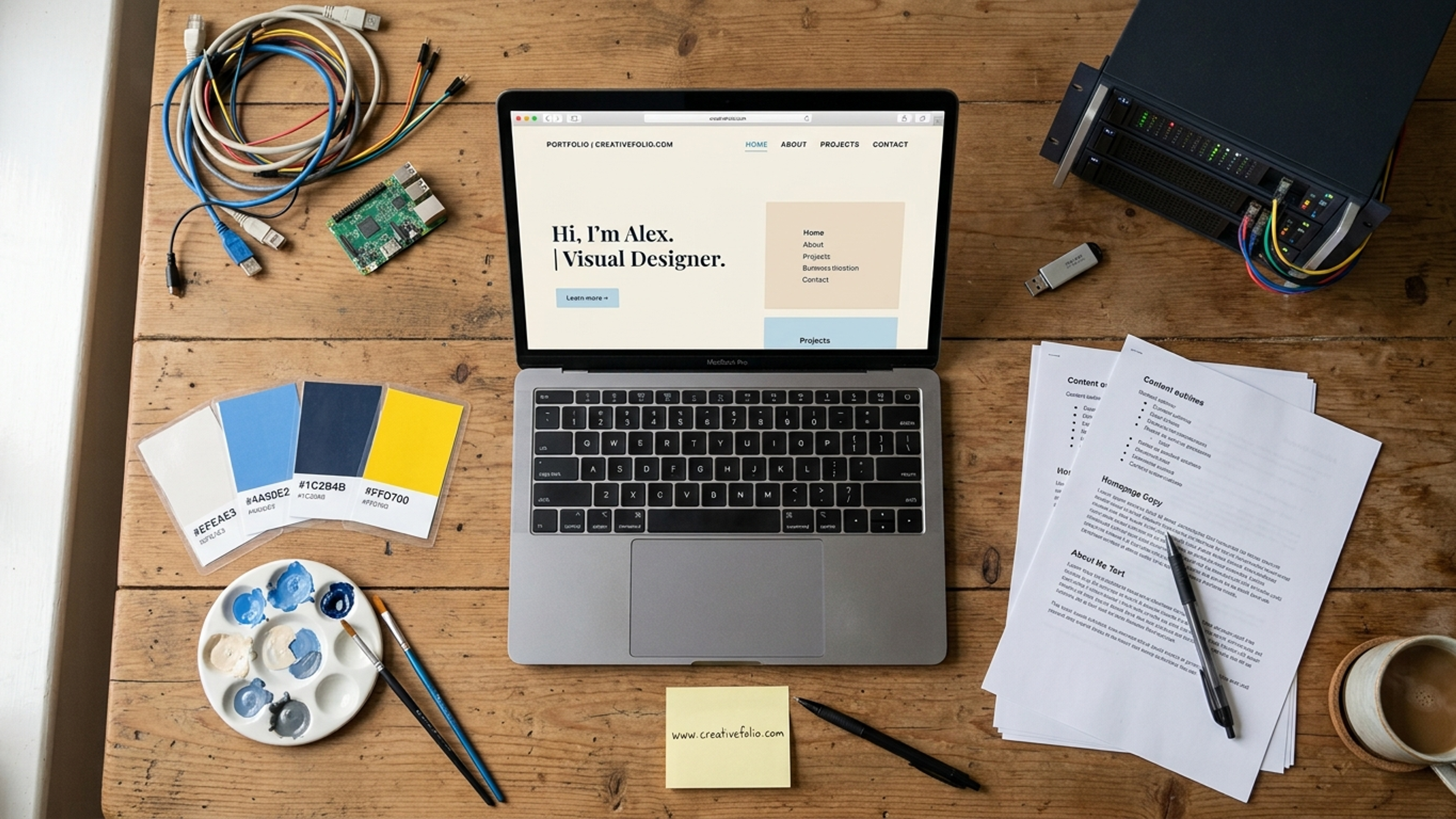
This is the piece most people underestimate. A professional website needs professional raw material: sharp photos of your actual business (not generic stock), clear descriptions of your services with prices, your story, testimonials, and accurate contact details. Thin content is what makes a site feel cheap regardless of the design around it. Gather it before the project starts — our guide on preparing content for a new website lists exactly what to collect — and if you serve tourists, plan it in both English and Spanish from day one.
Design isn't decoration; it's credibility. Stanford's web-credibility research found that people judge a site's trustworthiness first and foremost by its visual design — before reading a word. Professional design means a clean visual identity consistent with your brand, obvious navigation, readable typography, and — critically in this market — flawless presentation on a phone, because that's where most Dominican and tourist traffic looks first. It's also what separates a real site from a template with your logo on it, a difference we detail in why Dominican businesses need more than templates.
Under the design sits the machinery that determines whether the site actually works as a business tool:
A professional site lets you update prices, photos, and content without begging a developer — that's what a content management system is for. And it has a maintenance plan: software updates, backups, security, and small fixes. A website is not a one-time purchase; an unmaintained site slowly breaks, slows down, and becomes a security risk.
Putting the pieces together in the Dominican Republic in 2026: the domain (~US$10–20/year), hosting, and the build itself — around US$400 for a professional landing page or US$950 for a complete business website, with maintenance around US$95/month (we include the first year free). The full breakdown is in how much a website costs in the DR in 2026, and the complete process from decision to launch is in our full guide to website creation for Dominican businesses.
You provide the content and the business knowledge; a good developer brings everything else as a package — domain setup in your name, fast hosting, professional design, the technical layer, and the maintenance plan. That's exactly how we build at DR Web Studio: fast, bilingual, mobile-first sites where you own everything. If you're ready to turn this checklist into a real website, contact us for a free consultation.