Business Tips
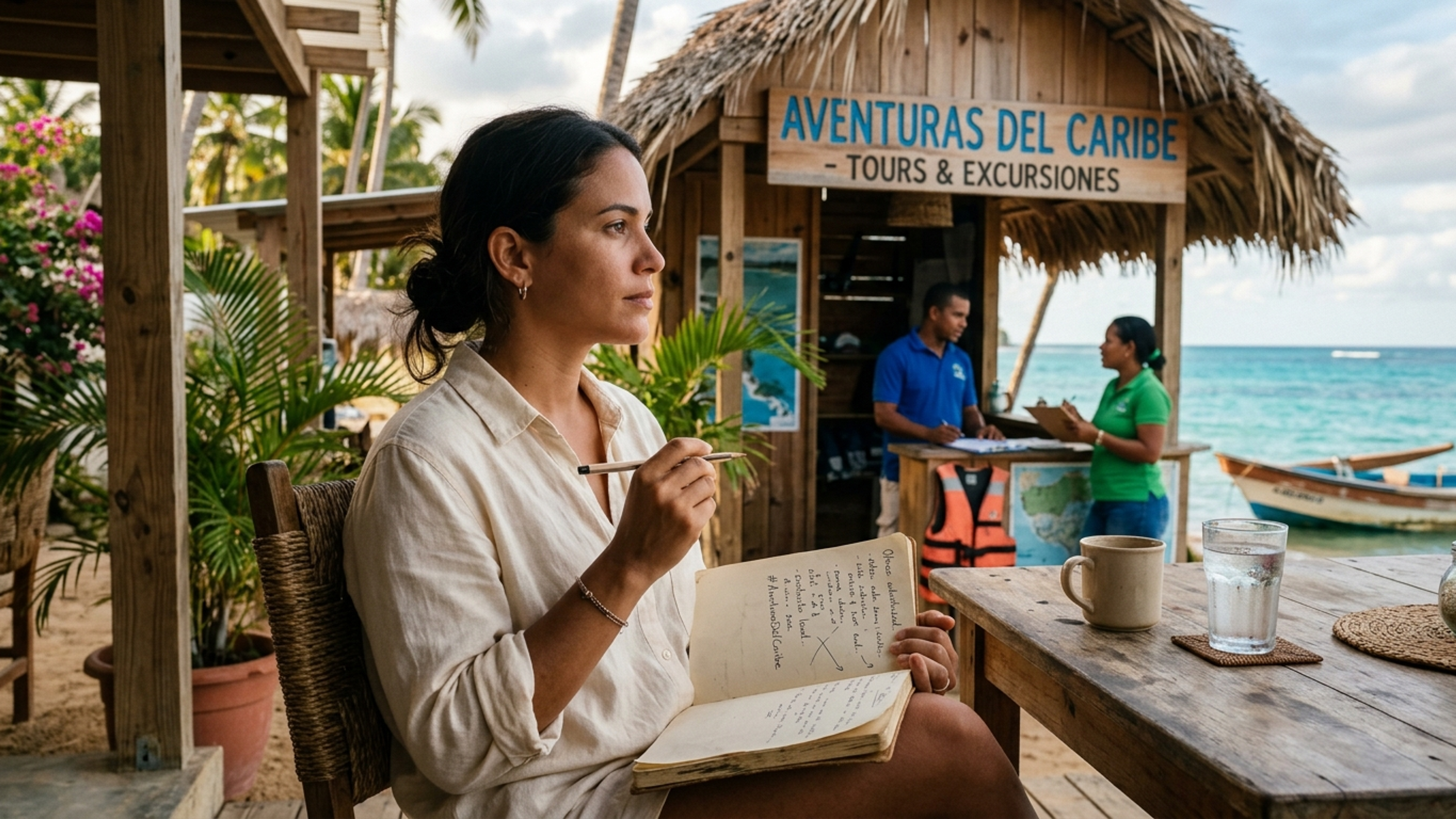
Of all the parts of building a website, one stalls more projects than any other — and it is not the design, the technology, or the budget. It is the content. Specifically, the words. A developer can build you a beautiful, fast website in a matter of weeks, but it remains an empty shell until someone writes the actual text: what your tours offer, who you are, why a visitor should choose you. And for most business owners, sitting down to write that text feels genuinely impossible. The cursor blinks, the page stays blank, and the project stalls for weeks.
If that is you, this guide is the unlock. You do not need to be a professional writer to produce website content that works. You need a simple framework, a few principles, and permission to stop trying to sound impressive. Writing about your own business is hard mostly because people approach it the wrong way — and once you flip your approach, the words come far more easily and, more importantly, they actually convert browsers into bookings.
Here is how to write each part of your tourism website, even if you have never written marketing copy in your life.
Before any specific tips, internalize the single most important principle, because it fixes the most common reason content is hard to write and fails to convert.
Most business owners write inside-out: they start from themselves and their business. "We are a family-owned dive center established in 2015, offering PADI-certified courses with state-of-the-art equipment." It is accurate, and it is forgettable, because it leads with what you are instead of what the customer wants. The research on this is clear — brands with clear, customer-focused messaging convert as much as 23% better than those with vague, inside-out, jargon-heavy copy.
The fix is to write outside-in: start from the customer, their desire, and their worry. What does the tourist actually want? To feel the thrill of seeing a reef for the first time, safely, with someone they trust. So you write: "See the Caribbean's most beautiful reefs up close — even if you've never dived before. Our patient, certified instructors make your first dive safe, easy, and unforgettable." Same business, same facts, but now it leads with the customer's desire and addresses their fear. That is the whole shift, and it makes both the writing easier (you are describing your customer, whom you know well) and the result far more compelling.
Before you write a single page, write down two things: what your customer deeply wants, and what they are worried about. Every page becomes an answer to those two things.
Tourism is an emotional purchase. People do not book a catamaran tour because they need transportation across water. They book it because they want to feel the sun, the freedom, the joy of a perfect day they will remember for years. Your content should sell that feeling first, and handle the logistics second.
This does not mean abandoning facts — tourists absolutely need the practical details before they book. It means leading with the experience and the emotion, then supporting it with the specifics. Paint the picture first: the warm water, the snorkeling stop, the rum on the deck as the sun goes down. Then give the details: duration, what's included, the price, what to bring. Feeling opens the door; facts let them walk through it. A page that is all logistics and no feeling reads like a spec sheet; a page that is all feeling and no facts leaves the tourist unable to actually commit. You need both, in that order.
For a Punta Cana business specifically, your greatest content asset is the genuine experience you offer. Describe it vividly and specifically — the actual beach, the actual reef, the real moment your guests fall in love with the day. Generic tourism language ("unforgettable experiences await") says nothing; specific, sensory description ("snorkel above a coral garden alive with parrotfish, then pull up to a sandbar where the water is waist-deep and the color of glass") puts the reader there.
The fastest way to write forgettable content is to reach for the generic phrases every tourism website uses: "world-class service," "breathtaking views," "memories that last a lifetime," "hidden gem." These phrases are invisible — readers' eyes slide right over them because they have seen them a thousand times, and they could describe any business anywhere.
Specificity is what makes content believable and memorable. Instead of "world-class service," describe what you actually do: "Your guide remembers your name, knows exactly where the sea turtles feed that morning, and has cold water waiting when you climb back aboard." Instead of "breathtaking views," describe the actual view. Specific detail does two jobs at once: it is more persuasive, and it is far easier to write, because you are simply describing the true, concrete reality of your business instead of straining for impressive-sounding abstractions.
This authenticity is also increasingly a competitive advantage. As generic, AI-generated copy floods the web, the genuinely specific and human voice of a real Dominican business — its actual character, its real stories, its true local knowledge — stands out more than ever. Your authenticity is something no competitor can copy.
Here is how the principles above apply to the specific pages of a tourism website.
The homepage. Your homepage has seconds to answer three questions: What do you offer? Who is it for? What should I do next? Lead with a clear, customer-focused headline that states the experience and the benefit — not your company name and founding year. Follow with a brief, emotional overview of what you offer, then guide the visitor toward the next step. Resist the urge to cram everything here; the homepage is the doorway, not the whole house.
Service or tour pages. This is where bookings are won or lost, so apply the framework fully. Open with the customer's desire or problem, not a dry description. Paint the experience vividly. Then provide the concrete details a tourist needs to commit: what's included, duration, pricing, what to bring, how to book. End with a clear call to action. Each distinct service deserves its own page — both because it lets you write specifically and because it helps each one rank in Google for its own search terms.
The About page. Tourists, especially international ones choosing a business they have never visited, read your About page to decide whether to trust you. This is not the place for a corporate history; it is the place for your genuine story. Why did you start this? What do you love about what you do? Who are the real people they will meet? Authentic, human storytelling here does enormous trust-building work — it turns an anonymous business into people the tourist feels good about booking with.
The contact page. Keep it simple and reassuring. Make it effortless to reach you, state how quickly you respond, and remove any anxiety about the next step. A warm, clear contact page converts; a cold, bare one loses people at the final moment.
The call to action — the button or line that tells the reader what to do next — is one of the highest-leverage pieces of text on your whole site, and most businesses write it weakly.
Two evidence-backed improvements make a real difference. First, be specific rather than generic: a tailored, specific call to action dramatically outperforms a vague one — analysis of hundreds of thousands of CTAs found personalized, specific ones converting far better than generic "submit" or "contact us" buttons. Second, write from the customer's perspective, in the first person where it fits: shifting a button from "Book Your Tour" to "Book My Tour" — the customer's own voice — has been shown to lift clicks meaningfully. Most powerfully, make the CTA describe the value the customer gets: "Reserve my spot on the sunset cruise" beats "Submit" every time. Tell the reader exactly what good thing happens when they click.
People do not read websites the way they read books. They scan — especially on phones, especially tourists making quick decisions. Content written in dense, unbroken paragraphs goes unread no matter how good it is.
Write for scanning: short paragraphs, clear descriptive headings that let someone find what they need, and the most important information first. Break up text with the photography that, for a tourism business, does so much of the persuading. A good rule is that a visitor should be able to skim your page in fifteen seconds and come away understanding what you offer, why it is great, and how to book — then read the details if they want them. Note that copy and images work together: text carries the message images can't, but overloading a page with heavy media slows it down and hurts the experience, so balance the two.
For a Punta Cana business serving both international tourists and local or Latin American customers, your content needs to exist properly in both English and Spanish — and this is where a specific, costly shortcut tempts many owners: running one language through Google Translate to produce the other.
Resist it. Machine-translated content reads as slightly off to a native speaker — stiff, occasionally wrong, subtly unprofessional — and it undermines exactly the trust your content exists to build. The emotional, persuasive, culturally-aware quality that makes tourism copy work is precisely what machine translation loses. Each language version should be written or properly adapted natively, so it reads naturally and persuasively to that audience. This is part of the broader bilingual setup we cover in bilingual SEO — and it matters as much for the words themselves as for the technical setup behind them.
If the blank page still feels daunting, follow this sequence and it becomes manageable.
First, write down what your customer wants and what they worry about. Second, list every page your site needs (use the page guide above). Third, for each page, write a rough draft focused on the customer's desire, in plain spoken language — imagine you are talking to a friendly tourist in front of you and just explaining it; do not try to sound "professional." Fourth, go back and make it specific, replacing every generic phrase with a concrete, true detail. Fifth, add clear, value-driven calls to action. Sixth, read it aloud — if it sounds stiff or salesy, simplify it until it sounds like a real person who loves their business. That last step alone fixes most amateur copy.
This whole effort connects directly to preparing well for a web project, which we cover in how to brief a web developer — content readiness is the single biggest factor in whether a project finishes on time.
Writing your own content is genuinely doable with the framework above, and no one knows your business and your genuine experience better than you. But there is a real difference between content that is adequate and content that actively sells — and if writing is not your strength, or you simply do not have the time, getting professional help with your copy can be one of the highest-return investments in your whole website. The words are what turn a beautiful design into actual bookings.
At DR Web Studio, we know content is where projects stall, so we help our clients through exactly this — whether that means coaching you to write it yourself with the framework above, refining your drafts, or handling the copywriting for you in both languages. We would rather plan for content from the start of a project than watch a finished website sit empty waiting for words, which is the most common cause of launch delays in the Dominican market.
If you are facing a blank page and a website that needs filling — or you want your content to do more than just describe your business, and actually persuade — request a free consultation. We will help you turn what you know about your business and your customers into words that book tours, fill tables, and win clients — in both languages, in a voice that sounds authentically like you.
You know your business better than any writer ever could. The framework above just helps you get that knowledge onto the page in a way that turns readers into customers.