E-commerce
How to Accept Online Payments in the Dominican Republic (2026 Guide)
Jun 22, 2026
9 min read
StripePayPal
Read More
Every online store has to run on something, and the platform you pick shapes your costs, your flexibility, and how much you'll fight your own website for years. For Dominican businesses the decision usually comes down to three real options: Shopify, WooCommerce, or a custom-built store. Most comparison articles only cover the first two — and almost none of them account for the one factor that changes the math in the Dominican Republic: how each option handles local card payments.
This guide breaks down all three honestly, including when each is the right call, and flags the local catches that generic advice misses. If you're earlier in the process, our guide to selling online in the Dominican Republic covers the bigger picture; this one is about choosing what your store is built on.
In plain terms:
There's no universally "best" platform. There's the one that fits how you sell, how you grow, and — critically — how you get paid here.
Shopify is the quickest way to get a competent store live. The setup is guided, no coding required, the themes are polished, and the built-in feature set (inventory, shipping tools, abandoned-cart recovery, even AI copy tools) is genuinely strong. Plans run from roughly US$39 to US$399 per month, with checkout customization and enterprise features reserved for Shopify Plus (around US$2,300/month).
The catch most beginners miss is the transaction fee. Shopify has its own processor, Shopify Payments, that waives the platform fee — but Shopify Payments is not available in the Dominican Republic. That single fact reshapes the entire cost picture for a Dominican store, and we'll come back to it below, because it's the most important thing on this page.
Shopify is also a walled garden. It enforces a fixed /products/ URL structure you can't change, advanced customization needs its Liquid templating language, and migrating off Shopify later is genuinely painful. You're renting, not owning.
Shopify fits a business that wants to launch fast, has straightforward needs, and would rather pay a predictable monthly fee than manage anything technical.
WooCommerce powers a huge share of the world's online stores — by most estimates around a third of all e-commerce sites — and for good reason. The plugin itself is free, you own your data outright, and crucially, WooCommerce charges no platform transaction fee — you pay only what your payment gateway charges. It also gives you far more SEO control (full URL structures, schema, Yoast or Rank Math) than Shopify allows.
The trade-off is that you assemble and maintain everything: hosting, the WordPress core, the theme, and a stack of plugins for payments, shipping, security, and caching. Each plugin is one more thing that can break or need updating, and as your traffic grows, scaling means actively managing your hosting and database rather than letting a platform absorb it. Year-one costs are flexible but real — typically a few hundred dollars and up depending on hosting and extensions.
For the Dominican market, WooCommerce has a concrete advantage: the local gateways (AZUL, CardNET, VisaNet) all offer WooCommerce plugins, so you can integrate Dominican card payments directly — with no platform surcharge on top.
WooCommerce fits a business that wants control, fee-free transactions, and strong SEO, and either has technical capacity in-house or a developer on call to maintain it.
A custom store throws out the template entirely. Instead of bending your business to fit a platform, the platform is built around your business. At DR Web Studio we build on Next.js with a headless CMS like Sanity, which means the storefront is fast, the content is easy for you to manage, and everything — checkout flow, bilingual content, payment integration, design — is yours.
The advantages compound for the right business: best-in-class performance (which directly affects conversions and Google rankings — see our piece on Core Web Vitals and sales), no platform lock-in, no per-transaction platform fees, genuinely bilingual architecture for tourism businesses serving both international and local customers, and a checkout built around exactly the Dominican gateways you use. This is also the natural answer when a business has outgrown what a template can do — the same reasoning we lay out in Next.js vs WordPress for your business.
The trade-off is honest: a custom build costs more upfront and requires a development partner. It isn't the right choice for someone who just wants a simple store live next week on the smallest possible budget.
Custom fits an established or growing business — especially a tourism or hospitality brand — that needs speed, a distinctive experience, true bilingual support, and full ownership, and sees its website as an investment rather than a monthly expense.
Here's the part the global comparisons get wrong for our market. Because Shopify Payments isn't available in the Dominican Republic, a Dominican Shopify store has to connect a third-party gateway. AZUL actually brought Shopify to the local market with peso settlement through its gateway, so it works — but Shopify then charges its own platform fee of roughly 0.5%–2% on top of what AZUL already charges you per transaction.
On WooCommerce or a custom store, that extra Shopify surcharge simply doesn't exist. You integrate AZUL or CardNET directly and pay only the gateway's own rate. Over a year of real sales volume, that difference is not trivial — it can be the gap between a platform that quietly taxes your growth and one that doesn't. (For the full picture of how local gateways work, see our guide to accepting online payments in the Dominican Republic.)
Compare total cost of ownership, not the launch price:
A simple way to land the decision:
If you're not sure where you land, the honest tiebreaker is your trajectory: a hobby or first test leans Shopify; a serious, growing Dominican business — especially in tourism — almost always does better long-term on WooCommerce or custom.
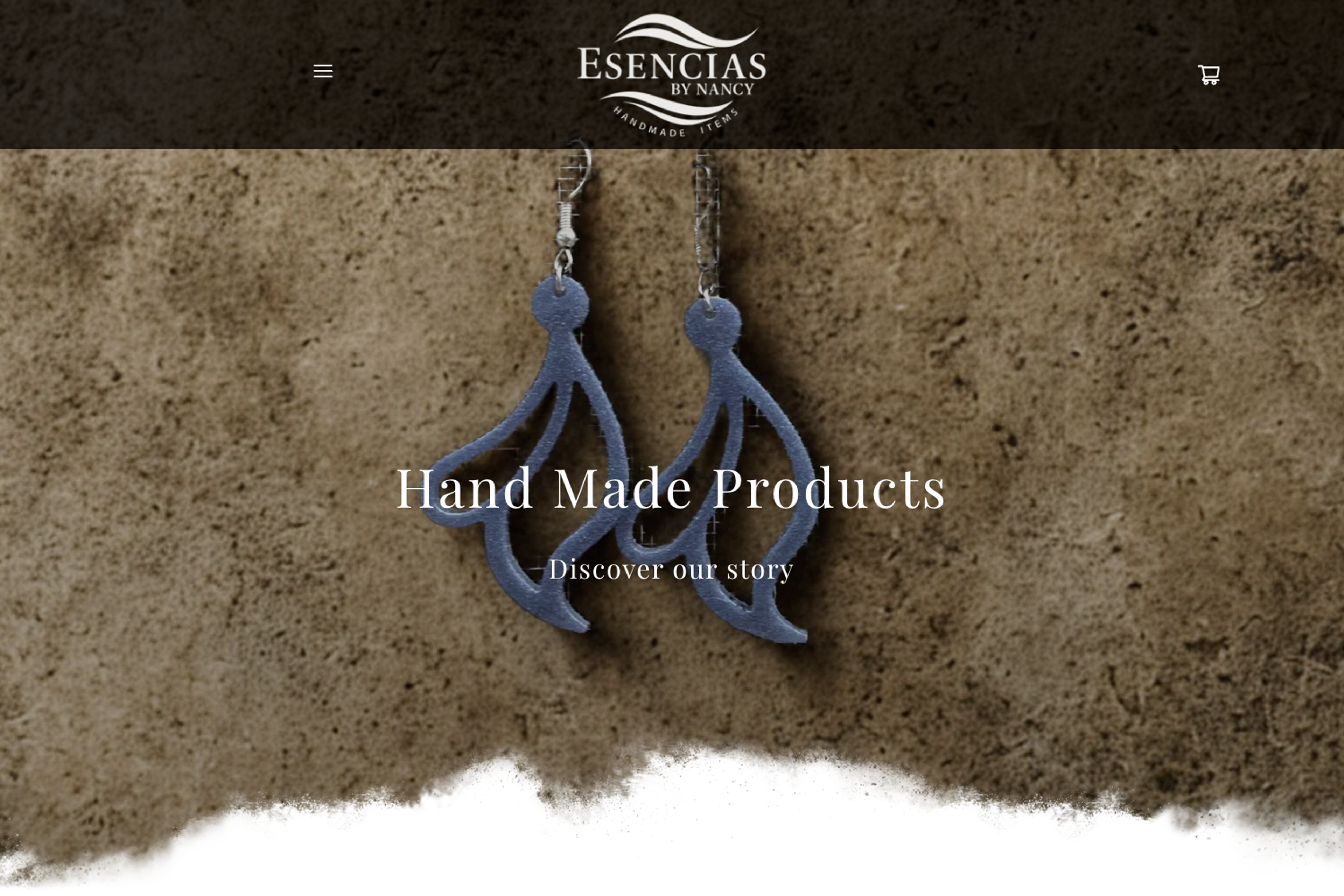
At DR Web Studio we build custom and WooCommerce stores for Dominican businesses, with the right local gateway wired directly into the checkout and no unnecessary platform fees skimming your sales. We've done this for real local sellers — like the bilingual store behind our Esencias by Nancy e-commerce case study — and we'll tell you honestly when a simple Shopify store is genuinely the smarter move for where you are.
If you're weighing platforms for your store, get in touch for a free consultation. We'll look at how you sell, what you're aiming for, and recommend the platform that actually fits — not the one that's easiest to sell you.